
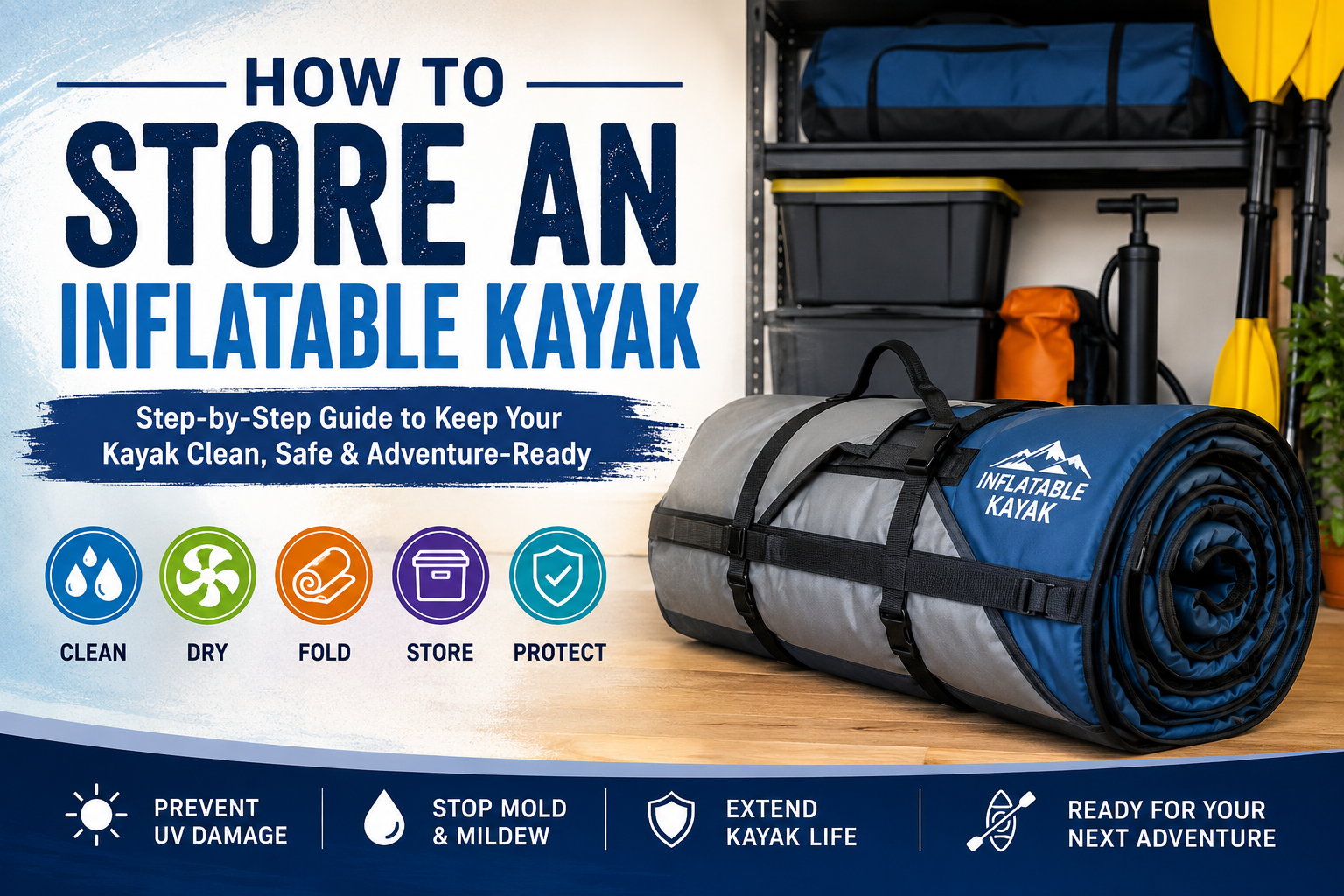
How to store an inflatable kayak
Knowing how to store an inflatable kayak correctly is one of the most important aspects of kayak ownership. Proper storage protects the material, prevents mold and mildew, reduces wear on seams, and can add years to your kayak’s lifespan.
Many inflatable kayak owners focus heavily on paddling performance but overlook storage practices. Unfortunately, improper storage is one of the leading causes of premature damage, leaks, and costly repairs.
Whether you own a PVC recreational kayak, a drop-stitch touring model, or a premium Hypalon kayak, this guide will show you the safest and most effective storage methods.
What You’ll Learn
- Why proper kayak storage matters
- Cleaning and drying procedures
- How to deflate an inflatable kayak correctly
- Folding techniques that prevent damage
- Short-term vs. long-term storage
- Winter storage recommendations
- Common mistakes to avoid
- Maintenance checks before and after storage

Why Proper Inflatable Kayak Storage Matters
Proper storage protects critical components including:
- Air chambers
- Valves
- Seams
- Outer fabric
- Protective coatings
Industry manufacturers report that UV exposure, moisture retention, and improper folding are among the most common causes of inflatable kayak deterioration.
Benefits of Proper Storage
- Extends kayak lifespan
- Prevents mold and mildew
- Reduces seam stress
- Protects valves
- Minimizes UV damage
- Improves performance on future trips
Expert Insight
Many kayak manufacturers estimate that proper maintenance and storage can significantly extend the usable life of an inflatable kayak compared to poorly stored equipment.
Clean Your Inflatable Kayak Before Storage
One of the most overlooked inflatable kayak storage tips is cleaning the kayak thoroughly before putting it away.
Sand, dirt, salt, and organic debris can gradually damage materials and encourage mold growth.
Step-by-Step Cleaning Process
- Rinse the kayak with fresh water.
- Remove mud, sand, and debris.
- Use mild soap if necessary.
- Clean around valves and seams.
- Rinse thoroughly.
- Allow complete drying.
Areas That Need Special Attention
- Seat attachment points
- Valve openings
- Floor seams
- Cockpit corners
- Drainage areas
Common Cleaning Mistakes
- Using bleach
- Pressure washing
- Harsh chemical cleaners
- Storing while dirty
Dry the Kayak Completely Before Storage
Moisture is the biggest enemy of inflatable kayak storage.
Even small amounts of trapped water can create:
- Mold
- Mildew
- Unpleasant odors
- Material degradation
How Long Should You Dry an Inflatable Kayak?
Most kayaks should air dry for:
- 12–24 hours after cleaning
- Longer in humid climates
Quick Drying Tips
- Open all air chambers.
- Wipe surfaces with microfiber towels.
- Store in a shaded, ventilated area during drying.
- Remove seats and accessories.
How to Deflate an Inflatable Kayak Correctly
Improper deflation can stress seams and internal structures.
Deflation Steps
- Open all valves.
- Allow natural air release.
- Gently press remaining air out.
- Start from the bow.
- Move toward the valves.
- Avoid stepping aggressively on the kayak.
Why Proper Deflation Matters
Correct deflation:
- Protects seams
- Prevents creasing
- Makes folding easier
- Reduces storage bulk
Best Way to Fold an Inflatable Kayak for Storage
Many owners ask:
Should You Fold or Roll an Inflatable Kayak?
For most models, rolling is preferred because it reduces sharp creases.
Recommended Folding Method
- Lay kayak flat.
- Remove accessories.
- Ensure complete drying.
- Fold sides inward.
- Roll toward the valves.
- Secure loosely.
Best Places to Store an Inflatable Kayak
Indoor Storage
Indoor environments provide the best protection.
Recommended Locations
- Closets
- Spare rooms
- Climate-controlled garages
- Basements with low humidity
Benefits
- Stable temperature
- Reduced UV exposure
- Lower moisture risks
Garage Storage
Garage storage works well if:
- Temperature remains moderate
- Direct sunlight is avoided
- Rodents are controlled
Garage Storage Checklist
- Use shelving
- Keep off concrete floors
- Avoid heaters
- Use breathable covers

How to Store an Inflatable Kayak During Winter
Cold weather creates unique storage challenges.
Winter Storage Checklist
Before Winter
- Clean thoroughly
- Dry completely
- Inspect for damage
- Lubricate valves if recommended
During Winter
- Store indoors
- Avoid freezing temperatures
- Keep away from heaters
- Reduce humidity exposure
Spring Preparation
- Inflate fully
- Inspect seams
- Check valves
- Perform leak test
Can You Store an Inflatable Kayak Inflated?
Quick Answer
Yes, partially inflated storage is possible if adequate indoor space is available.
However, fully inflated long-term storage is generally not recommended because temperature fluctuations can affect internal air pressure.
When Inflated Storage Works Best
- Climate-controlled room
- Short-term storage
- Large storage area
Common Inflatable Kayak Storage Mistakes
1. Storing While Wet
Creates mold and mildew.
2. Leaving in Direct Sunlight
UV rays weaken materials over time.
3. Using Tight Folds
Can create permanent creases.
4. Storing Near Heat Sources
Heat accelerates material aging.
5. Ignoring Small Repairs
Minor leaks become major issues.
6. Overcompressing the Kayak
Can stress seams and valves.
Inflatable Kayak Storage Maintenance Checklist
After Every Trip
- Rinse kayak
- Dry completely
- Remove debris
- Inspect valves
Monthly
- Check seams
- Inspect fabric
- Verify accessories
Annual
- Deep clean
- Leak test
- Replace worn components
- Review repair kit contents
Conclusion
Understanding how to store an inflatable kayak properly can dramatically increase its lifespan and keep it performing at its best. Always clean and dry your kayak thoroughly, deflate it carefully, avoid excessive folding pressure, and store it in a cool, dry environment. Following these storage best practices will help protect your investment and ensure your inflatable kayak is ready for every adventure.