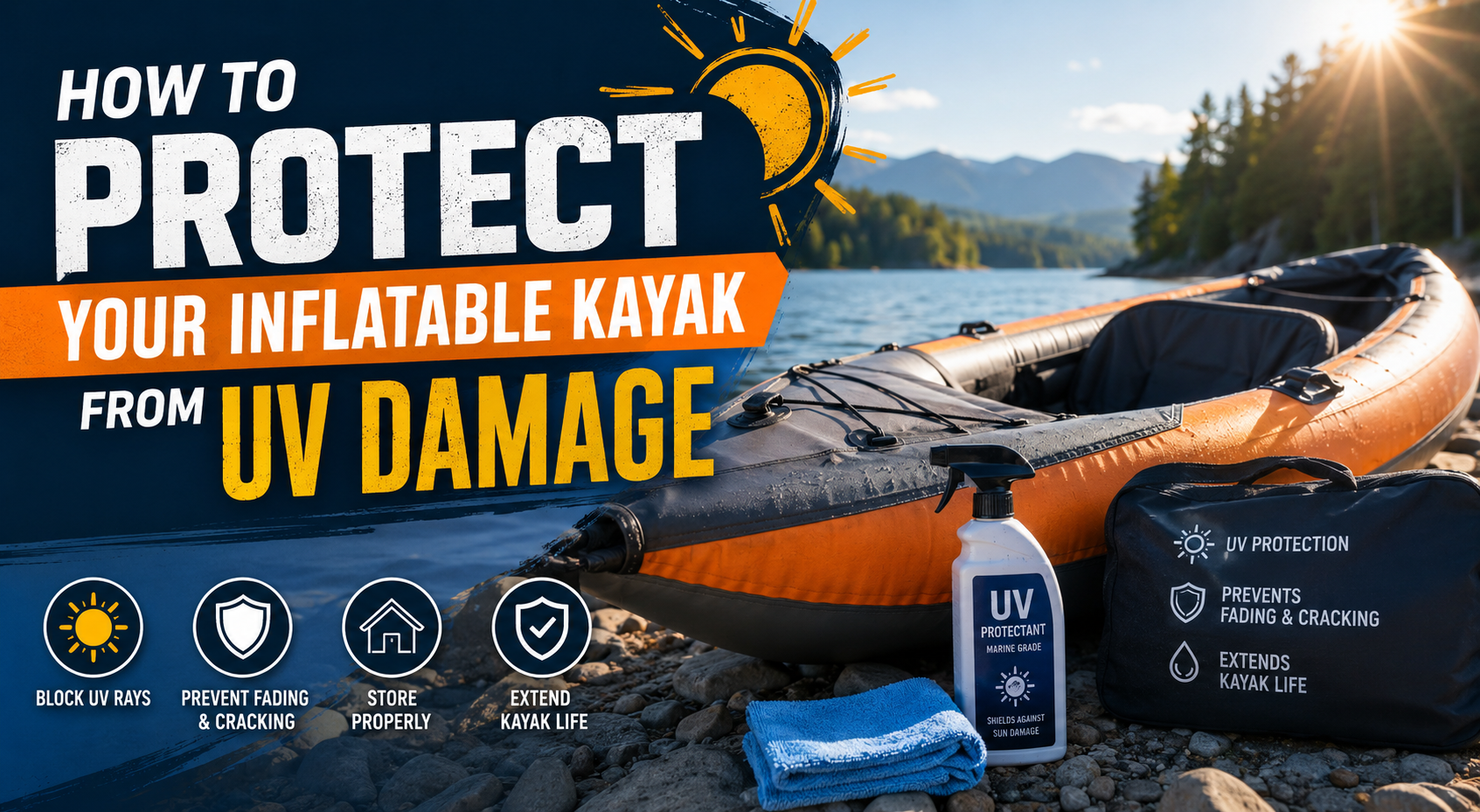
Learn how to protect your inflatable kayak from UV damage with expert storage, cleaning, and maintenance tips that extend kayak lifespan.
Inflatable kayaks are built to withstand water, weather, and adventure. However, one silent threat can dramatically shorten their lifespan: ultraviolet (UV) radiation from the sun.
Many kayak owners focus on punctures and storage but overlook long-term sun exposure. Over time, UV rays can weaken materials, fade colors, reduce flexibility, and increase the risk of leaks.
If you want your inflatable kayak to last for years, understanding UV protection is essential.
What You’ll Learn
- How UV rays damage inflatable kayaks
- Signs of UV deterioration
- The best UV protectants
- Proper storage techniques
- Cleaning and maintenance practices
- Seasonal protection strategies
- Common mistakes to avoid
- Expert tips for extending kayak lifespan

What Is UV Damage in Inflatable Kayaks?
Quick Answer
UV damage occurs when sunlight breaks down the chemical bonds in kayak materials such as PVC, Hypalon, and coated fabrics. This degradation weakens the material, causing fading, brittleness, cracking, and reduced durability.
How UV Radiation Affects Kayak Materials
The sun emits ultraviolet radiation that attacks polymers found in inflatable kayak fabrics.
Effects include:
- Color fading
- Material drying
- Surface chalking
- Loss of flexibility
- Weakened seams
- Increased puncture susceptibility
Research in polymer science consistently shows that prolonged UV exposure accelerates oxidation and material aging.
Why Inflatable Kayaks Are Vulnerable to Sun Exposure
Not all kayak materials react the same way.
| Material | UV Resistance | Maintenance Needs |
|---|---|---|
| PVC | Moderate | Regular protectant application |
| Hypalon | High | Occasional treatment |
| Nitrylon | Good | Periodic protection |
| Polyurethane-Coated Fabric | Moderate-High | Preventive maintenance |
PVC Kayaks
Most recreational inflatable kayaks use PVC.
Benefits:
- Affordable
- Lightweight
- Durable
Drawbacks:
- More susceptible to UV degradation
- Requires routine protection
Hypalon Kayaks
Premium kayaks often use Hypalon.
Advantages:
- Exceptional UV resistance
- Longer lifespan
- Better weather resistance
Signs Your Inflatable Kayak Is Suffering UV Damage
Look for these warning signs:
Visual Indicators
- Faded colors
- Dull appearance
- Surface discoloration
- White chalky residue
Structural Indicators
- Material stiffness
- Cracking
- Seam separation
- Air leaks
Performance Indicators
- Reduced flexibility
- Difficult folding
- Increased repair frequency
Early detection can prevent costly damage.
Best UV Protectants for Inflatable Kayaks
A quality UV protectant acts as sunscreen for your kayak.
Features to Look For
- Marine-grade formula
- UV inhibitors
- Non-greasy finish
- Compatibility with PVC and Hypalon
- Saltwater resistance
Application Process
- Wash kayak thoroughly.
- Allow complete drying.
- Spray protectant evenly.
- Wipe with microfiber cloth.
- Let cure according to instructions.
Recommended Frequency
| Climate | Application Frequency |
|---|---|
| Mild | Every 2-3 months |
| Sunny | Monthly |
| Tropical | Every 3-4 weeks |
| Heavy Use | After major trips |
Expert Recommendation
Frequent paddlers should inspect UV protection monthly during peak summer months.

How to Store an Inflatable Kayak to Prevent UV Damage
Proper storage provides the greatest protection against sun degradation.
Indoor Storage Is Best
Ideal locations:
- Garage
- Basement
- Storage room
- Climate-controlled shed
Benefits:
- Eliminates direct UV exposure
- Reduces temperature fluctuations
- Extends material lifespan
Outdoor Storage Best Practices
If indoor storage isn’t possible:
- Use UV-resistant covers
- Elevate off the ground
- Avoid reflective surfaces
- Keep away from glass walls
Never Store in These Locations
- Open rooftop areas
- Direct sunlight
- Hot vehicle interiors
- Uncovered decks
Use UV-Resistant Covers and Shade Systems
Benefits of Kayak Covers
Quality covers:
- Block UV rays
- Reduce heat buildup
- Prevent dirt accumulation
- Protect against weather
Features to Consider
- UV-resistant fabric
- Waterproof coating
- Ventilation panels
- Secure tie-down straps
Shade Solutions
Popular options:
- Portable canopies
- Carports
- Storage tents
- Covered racks
Clean Your Kayak Regularly to Enhance UV Protection
Dirt and salt accelerate material deterioration.
Cleaning Process
- Rinse with fresh water.
- Use mild soap.
- Gently scrub surface.
- Rinse thoroughly.
- Dry completely.
Why Cleaning Matters
Contaminants can:
- Trap heat
- Accelerate oxidation
- Reduce protectant effectiveness
Regular cleaning improves UV protectant performance.
Seasonal Inflatable Kayak UV Protection Schedule
Spring
- Deep clean
- Inspect seams
- Apply UV protectant
Summer
- Monthly inspections
- Reapply protectant
- Use shade whenever possible
Fall
- Clean thoroughly
- Repair minor issues
- Recoat protection layer
Winter
- Store indoors
- Reduce compression stress
- Keep dry
Common Mistakes That Cause UV Damage
Leaving the Kayak Inflated in the Sun
Heat increases internal air pressure and material stress.
Skipping UV Protectant Applications
Protection gradually wears off.
Storing Wet Equipment
Moisture contributes to mold and material degradation.
Ignoring Early Warning Signs
Small cracks often become expensive repairs.
Using Harsh Chemicals
Avoid:
- Bleach
- Solvents
- Petroleum cleaners
- Abrasive products
How Long Can an Inflatable Kayak Last with Proper UV Protection?
Quick Answer
A well-maintained inflatable kayak can last 7–15 years or more depending on material quality, usage frequency, storage practices, and UV protection measures.
Lifespan Factors
- Material quality
- Climate
- Storage habits
- Maintenance routine
- Exposure frequency
Owners who consistently apply UV protectants and store kayaks properly often achieve significantly longer service life.
Expert Tips for Maximum UV Protection
Follow the 3-Layer Protection Strategy
- UV protectant treatment
- Physical cover
- Shaded storage
Conduct Monthly Inspections
Check:
- Seams
- Valves
- Surface texture
- Color changes
Limit Midday Exposure
UV intensity peaks between 10 AM and 4 PM.
Dry Before Storage
Always allow complete drying before packing.
Conclusion
Understanding how to protect your inflatable kayak from UV damage is one of the most important parts of long-term kayak ownership. Sunlight can slowly weaken materials, fade colors, and shorten the life of your investment. By applying marine-grade UV protectants, cleaning regularly, using protective covers, and storing your kayak away from direct sunlight, you can dramatically extend its lifespan and maintain peak performance for years of paddling adventures.