
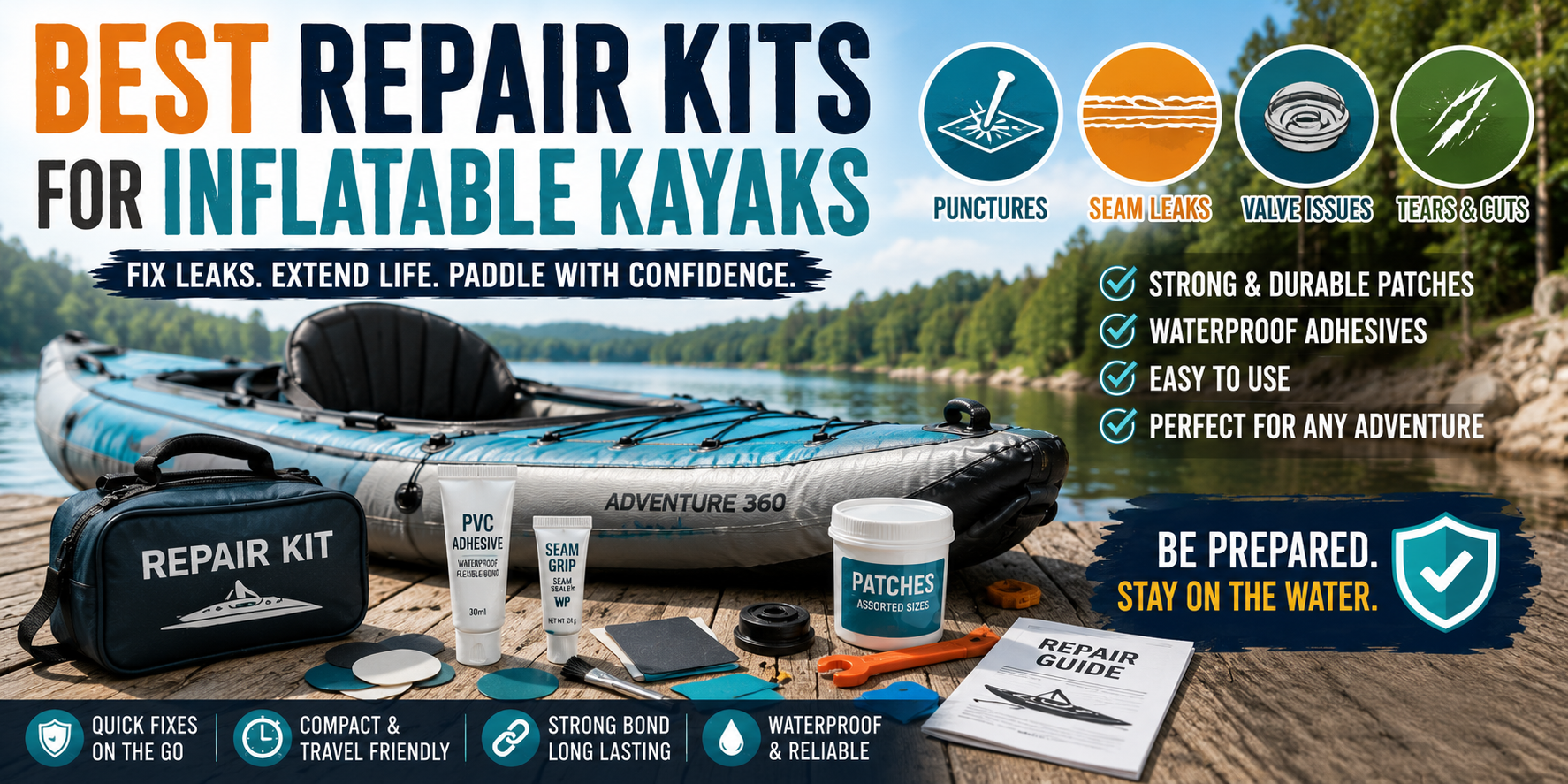
Discover the best repair kits for inflatable kayaks, compare top products, learn repair methods, and keep your kayak adventure-ready.
Nothing ruins a paddling adventure faster than opening your kayak storage bag and finding mold, mildew, or a strong musty smell. Whether you own an inflatable kayak, recreational kayak, fishing kayak, or touring kayak, moisture trapped inside the hull or fabric can quickly become a breeding ground for fungi.
Learning how to prevent mold and mildew in your kayak is one of the most important maintenance skills every paddler should master. Proper care not only protects your investment but also improves safety, performance, and longevity.
What You’ll Learn
In this guide, you’ll discover:
- Why mold and mildew develop in kayaks
- The dangers of mold growth
- How to dry a kayak properly
- Best kayak storage practices
- Cleaning techniques that prevent mildew
- Seasonal maintenance schedules
- Climate-specific prevention strategies
- Expert-approved mold prevention tips

What Is Mold and Mildew in a Kayak?
Quick Answer
Mold and mildew are fungi that grow in damp, dark, and poorly ventilated environments. In kayaks, they develop when moisture remains trapped on surfaces, inside air chambers, under seats, or inside storage bags for extended periods.
Key Differences
| Feature | Mold | Mildew |
|---|---|---|
| Appearance | Black, green, blue spots | White or gray powder |
| Growth Depth | Penetrates materials | Surface-level growth |
| Odor | Strong musty smell | Mild musty smell |
| Damage Potential | Higher | Lower |
Why It Matters
Unchecked mold can:
- Weaken kayak materials
- Create permanent stains
- Produce unpleasant odors
- Trigger allergies
- Reduce resale value
Why Mold and Mildew Grow in Inflatable Kayaks
Moisture Retention and Poor Ventilation
Inflatable kayaks are particularly vulnerable because water can become trapped in:
- Air chamber folds
- Drainage areas
- Seat attachments
- Storage compartments
- Carry bags
Common Causes
- Packing a wet kayak
- Storing in humid garages
- Lack of airflow
- Rainwater accumulation
- Condensation during temperature changes
Industry Insight
Outdoor equipment maintenance experts consistently identify trapped moisture as the leading cause of mold-related damage in inflatable watercraft.
Proper Kayak Cleaning Techniques to Prevent Mold
Clean Your Kayak After Every Trip
Cleaning removes organic material that mold uses as food.
Step-by-Step Cleaning Process
- Rinse with fresh water.
- Remove mud and debris.
- Wash using mild soap.
- Scrub high-contact areas.
- Rinse thoroughly.
- Allow complete drying.
Areas Often Missed
- Under seats
- Footrests
- Carry handles
- Zipper compartments
- Air valve areas
Expert Recommendation
Avoid bleach-based cleaners because they may damage kayak coatings and fabrics over time.
How to Dry an Inflatable Kayak Properly
The Most Important Mold Prevention Step
Proper drying is the single best way to prevent mold and mildew.
Drying Checklist
✓ Open all storage compartments
✓ Remove seats
✓ Open drainage ports
✓ Wipe surfaces with microfiber towels
✓ Air dry completely
✓ Inspect hidden moisture pockets
Step-by-Step Drying Method
- Position kayak in a shaded area.
- Drain excess water.
- Towel dry visible moisture.
- Leave partially inflated.
- Allow airflow for several hours.
- Check seams and folds before storage.
Common Drying Mistakes
- Folding while damp
- Storing immediately after paddling
- Drying in enclosed spaces
- Ignoring hidden compartments
Best Kayak Storage Tips for Mold Prevention
Choosing the Right Storage Environment
A dry storage area dramatically reduces mold risk.
Ideal Storage Conditions
| Factor | Recommended Range |
|---|---|
| Humidity | Below 60% |
| Temperature | 50°F–80°F |
| Ventilation | Good airflow |
| Sun Exposure | Minimal |
Best Storage Locations
- Climate-controlled garage
- Indoor storage room
- Dry basement with dehumidifier
- Ventilated shed
Avoid
- Damp basements
- Sealed plastic bags
- Humid attics
- Outdoor exposure

How Humidity Affects Kayak Mold Growth
Understanding the Danger Zone
Mold spores thrive when humidity remains above 60%.
Signs of Excess Humidity
- Condensation
- Musty odors
- Damp storage gear
- Persistent mildew spots
Solutions
- Use silica gel packs
- Install a dehumidifier
- Improve ventilation
- Monitor humidity levels
Expert Tip
A simple humidity monitor can prevent thousands of dollars in equipment damage over time.
Seasonal Maintenance Schedule for Kayak Mold Prevention
Spring Preparation
- Inspect for winter moisture
- Clean thoroughly
- Check storage areas
Summer Maintenance
- Dry after every trip
- Apply UV protectant
- Inspect weekly
Fall Storage Preparation
- Deep clean kayak
- Remove all moisture
- Perform mold inspection
Winter Storage
- Store in controlled environment
- Inspect monthly
- Maintain airflow
How to Remove Existing Mold and Mildew
Safe Mold Removal Process
Materials Needed
- White vinegar
- Warm water
- Soft brush
- Microfiber cloths
Steps
- Mix equal parts vinegar and water.
- Apply to affected area.
- Let sit for 10 minutes.
- Scrub gently.
- Rinse thoroughly.
- Dry completely.
Avoid
- Harsh chemicals
- Abrasive brushes
- Pressure washers
- Strong solvents
Mold Prevention Checklist
Before Storage
- Clean kayak
- Remove debris
- Dry completely
- Inspect seams
- Check air chambers
During Storage
- Maintain airflow
- Monitor humidity
- Perform monthly inspections
Before Next Use
- Check for odors
- Inspect hidden areas
- Confirm dryness
Quick Reference Prevention Table
| Problem | Cause | Prevention |
|---|---|---|
| Mold spots | Moisture | Complete drying |
| Musty odor | Poor ventilation | Improve airflow |
| Mildew stains | Humidity | Control humidity |
| Recurring mold | Improper storage | Climate-controlled storage |
| Surface discoloration | Long-term growth | Regular inspections |
Expert Tips for Long-Term Mold Prevention
Follow the 24-Hour Rule
Never store a kayak within 24 hours of use unless completely dry.
Use Breathable Storage Bags
Breathable materials reduce trapped moisture.
Remove Accessories
Take out seats and gear before storage.
Inspect Monthly
Regular inspections catch problems before they spread.
Keep Air Moving
Good airflow is one of the most effective mold prevention strategies available.
Conclusion
Understanding how to prevent mold and mildew in your kayak can dramatically extend the life of your equipment while keeping it clean, odor-free, and ready for your next adventure. By focusing on proper cleaning, complete drying, humidity control, and smart storage practices, you can prevent most mold problems before they start. Consistent maintenance is far easier—and far less expensive—than dealing with severe mold damage later.