
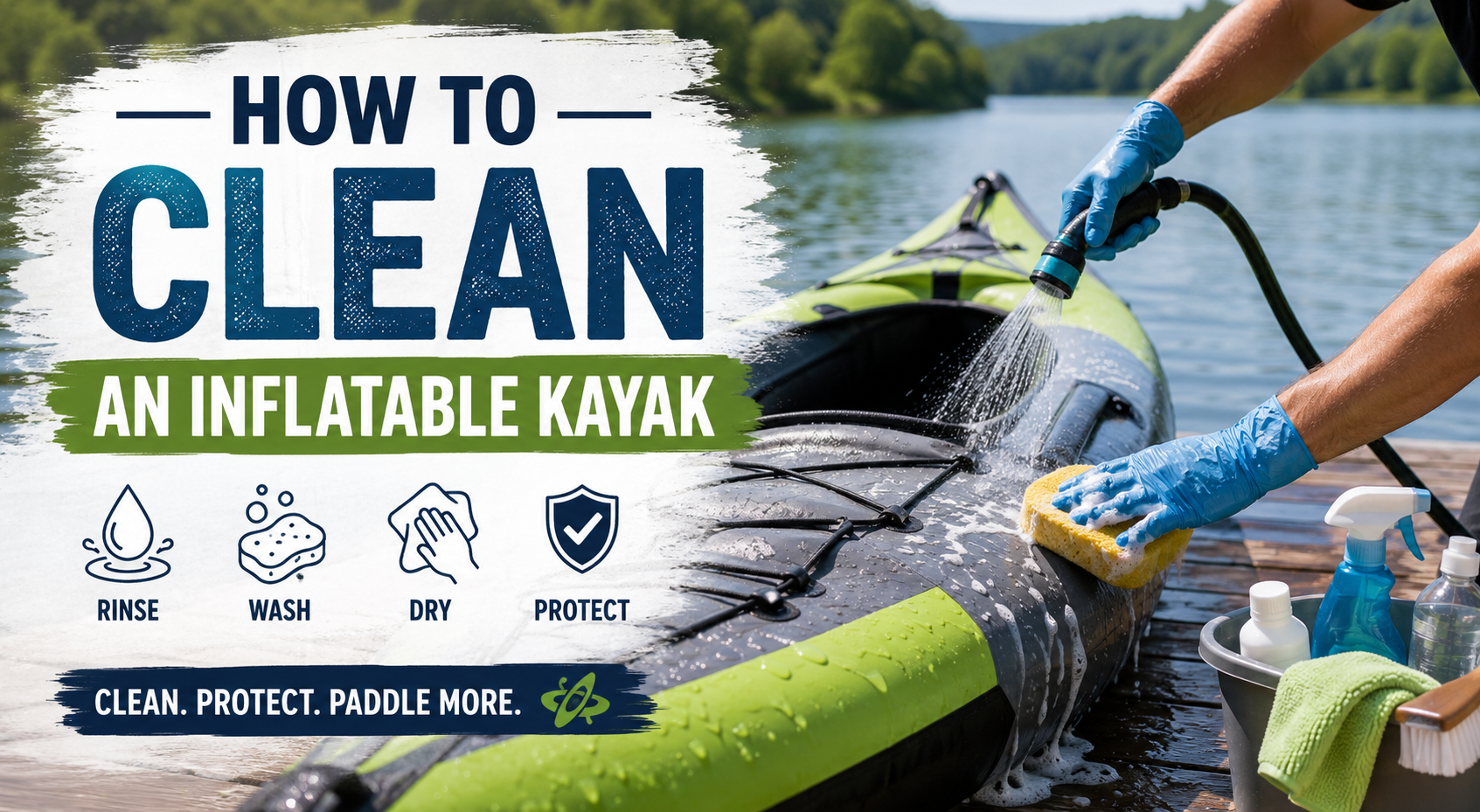
Introduction
An inflatable kayak can provide years of reliable adventures when properly maintained. However, dirt, algae, salt, mud, sunscreen residue, and moisture can gradually damage kayak materials if left untreated.
Knowing how to clean an inflatable kayak correctly helps prevent mold, unpleasant odors, UV deterioration, and premature wear. Regular cleaning not only keeps your kayak looking great but can significantly extend its lifespan.
What You’ll Learn
In this guide, you’ll discover:
- Why cleaning your inflatable kayak matters
- Step-by-step cleaning instructions
- The best cleaning products to use
- How to remove mold and stains
- Saltwater cleaning procedures
- Proper drying techniques
- Long-term storage recommendations
- Common mistakes to avoid
Why Inflatable Kayak Maintenance Matters
Regular maintenance is one of the most important aspects of kayak ownership.
Benefits include:
- Longer lifespan
- Better performance
- Reduced repair costs
- Improved appearance
- Mold prevention
- Protection against UV damage
Industry manufacturers commonly recommend cleaning kayaks after every trip, especially after saltwater use.

Signs Your Kayak Needs Cleaning
- Visible dirt buildup
- Salt residue
- Mold spots
- Musty odors
- Stains from algae or mud
- Sticky surfaces
Step-by-Step Guide: How to Clean an Inflatable Kayak
Step 1: Inflate the Kayak Slightly
A partially inflated kayak allows easier access to all surfaces.
Benefits:
- Reveals hidden dirt
- Makes cleaning more effective
- Protects seams during scrubbing
Step 2: Rinse Away Loose Dirt
Use clean freshwater to remove:
- Mud
- Sand
- Debris
- Salt residue
Expert Tip
Start rinsing from top to bottom to prevent redistributing dirt.
Step 3: Wash with Mild Soap
Mix mild soap with warm water.
Using a soft sponge:
- Dip sponge into solution.
- Clean one section at a time.
- Focus on high-contact areas.
- Avoid aggressive scrubbing.
Pay special attention to:
- Seats
- Handles
- Floor panels
- Air chambers
Step 4: Remove Tough Stains Safely
Common stains include:
- Algae
- Fish residue
- Mud marks
- Sunscreen stains
Safe Removal Method
- Apply diluted marine cleaner.
- Let sit for 3–5 minutes.
- Gently scrub with a soft brush.
- Rinse thoroughly.
Never use metal brushes or abrasive pads.
Step 5: Clean Air Valves and Seams
Valves often collect:
- Dirt
- Sand
- Salt crystals
Cleaning Process
- Deflate slightly.
- Inspect valves.
- Wipe using damp cloth.
- Remove debris carefully.
- Ensure valves seal properly.
Step 6: Rinse Thoroughly
Soap residue can attract dirt and weaken protective coatings.
Rinse until water runs completely clear.
Step 7: Dry Completely Before Storage
This is the most important step.
Proper Drying Checklist
- Open all air chambers
- Dry seams carefully
- Use microfiber towels
- Air dry in shade
- Ensure no trapped moisture remains
Drying may take several hours depending on weather conditions.

How to Clean an Inflatable Kayak After Saltwater Use
Saltwater can accelerate material deterioration if ignored.
Essential Saltwater Cleaning Steps
- Rinse immediately after use.
- Focus on valves and seams.
- Remove salt crystals completely.
- Dry thoroughly.
- Apply UV protectant.
Salt residue left behind can shorten kayak life significantly.
How to Remove Mold and Mildew from an Inflatable Kayak
Mold develops when kayaks are stored damp.
Signs of Mold
- Black spots
- Green patches
- Musty smell
Removal Process
- Use kayak-safe mold remover.
- Apply to affected area.
- Let sit briefly.
- Gently scrub.
- Rinse thoroughly.
- Dry completely.
Prevention Tips
- Never store wet.
- Improve ventilation.
- Inspect monthly.
- Store in dry conditions.
Inflatable Kayak Cleaning by Material Type
PVC Inflatable Kayaks
Most common material.
Best practices:
- Mild soap only
- Avoid solvents
- Use UV protectant regularly
Hypalon Inflatable Kayaks
Known for durability.
Maintenance tips:
- Marine-grade cleaners work well
- Rinse after every outing
- Inspect seams regularly
Drop-Stitch Kayaks
Popular among premium kayaks.
Care recommendations:
- Avoid excessive pressure during cleaning
- Protect floor panels
- Dry thoroughly around seams
Common Inflatable Kayak Cleaning Mistakes
Many owners unknowingly shorten kayak lifespan.
Avoid:
Storing While Wet
Leads to:
- Mold growth
- Bad odors
- Material degradation
Using Harsh Chemicals
Can:
- Damage coatings
- Fade colors
- Weaken fabric
Ignoring Saltwater Residue
Salt buildup may:
- Affect valves
- Accelerate wear
- Cause stiffness
Drying in Direct Sunlight
Excessive UV exposure can weaken materials over time.
Best Storage Practices After Cleaning
Proper storage protects your investment.
Storage Checklist
✓ Completely dry
✓ Cleaned thoroughly
✓ Loosely folded
✓ Stored indoors
✓ Away from sunlight
✓ Away from rodents
✓ Temperature controlled
Ideal Storage Locations
- Garage
- Basement
- Closet
- Storage room
Expert Tips to Extend Inflatable Kayak Lifespan
Experienced paddlers recommend:
- Rinse after every use
- Use UV protectants regularly
- Avoid dragging the kayak
- Inspect seams frequently
- Store loosely folded
- Repair punctures immediately
With proper maintenance, quality inflatable kayaks often last 7–15 years or longer.
Conclusion
Understanding how to clean an inflatable kayak properly is essential for maximizing performance, appearance, and lifespan. A simple routine of rinsing, washing with mild soap, drying thoroughly, and storing correctly can prevent mold, odors, UV damage, and costly repairs.
Whether you paddle in freshwater lakes, rivers, or coastal waters, consistent care ensures your inflatable kayak remains safe, reliable, and ready for your next adventure.