
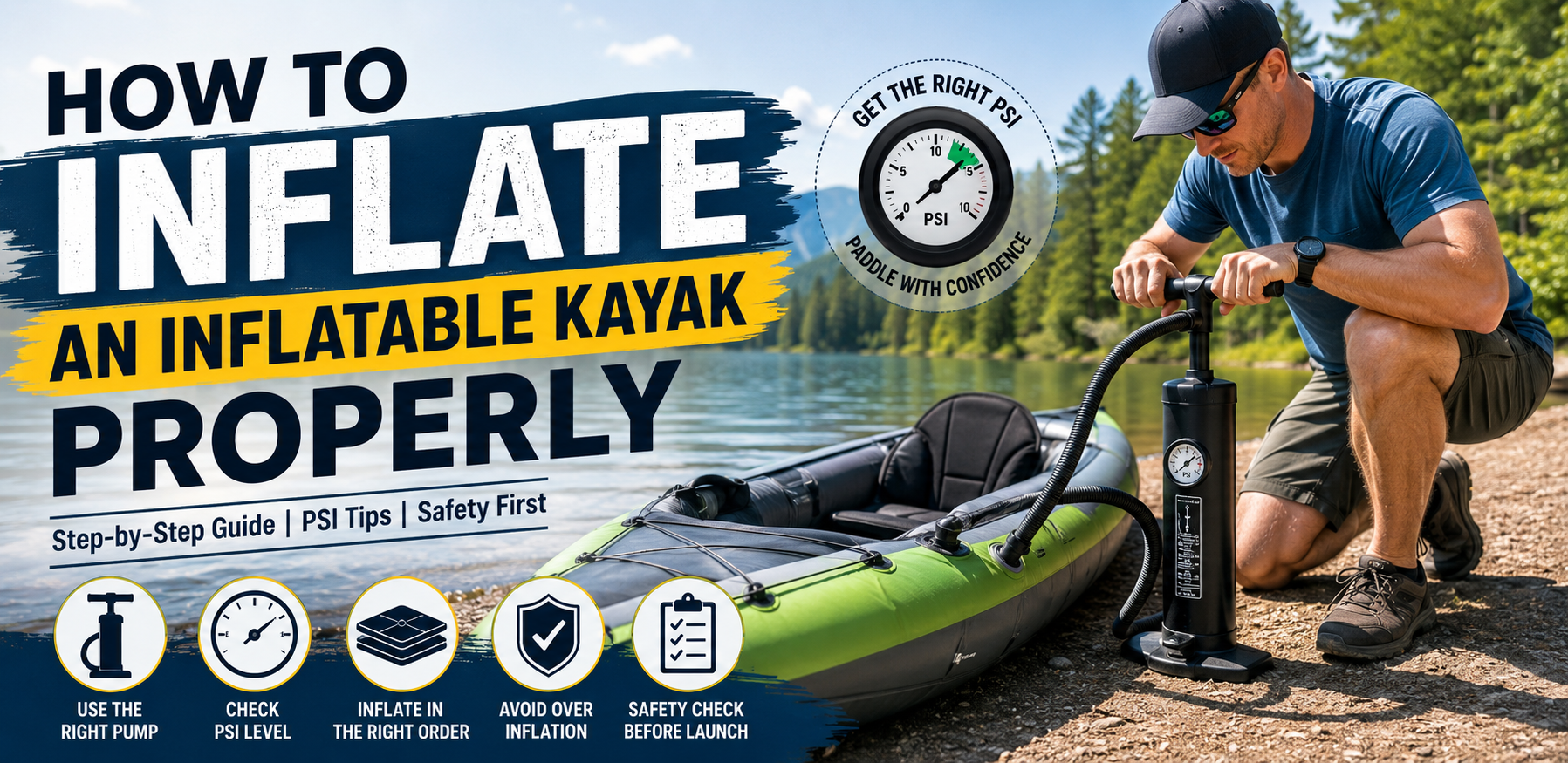
Learn how to inflate an inflatable kayak properly with expert tips, PSI charts, safety checks, and step-by-step instructions.
Learning how to inflate an inflatable kayak properly is one of the most important skills for any paddler. Correct inflation improves stability, speed, tracking, comfort, and safety on the water. Inflating your kayak too much can damage seams and valves, while underinflation can make paddling difficult and unsafe.
Whether you’re preparing for a lake adventure, river trip, or coastal exploration, understanding the right inflation process helps you get the best performance from your kayak.
What You’ll Learn
In this guide, you’ll discover:
- The correct inflation process
- Recommended PSI levels
- How to use different pump types
- Common inflation mistakes
- Temperature and weather considerations
- Troubleshooting air leaks
- Expert maintenance tips
- Safety checks before launching

What Does It Mean to Inflate an Inflatable Kayak Properly?
Inflating an inflatable kayak properly means filling each air chamber to the manufacturer’s recommended pressure level while maintaining balanced rigidity across the kayak.
Proper inflation ensures:
- Better stability
- Improved speed
- Enhanced tracking
- Longer material life
- Increased passenger safety
A well-inflated kayak should feel firm without being excessively hard.
Typical Inflatable Kayak PSI Ranges
| Kayak Type | Recommended PSI |
|---|---|
| Recreational PVC Kayak | 1-3 PSI |
| High-Pressure Floor | 6-10 PSI |
| Drop-Stitch Kayak | 8-15 PSI |
| Touring Inflatable Kayak | 3-8 PSI |
Why PSI Matters
Correct PSI provides:
- Better hull shape
- Greater efficiency
- Improved maneuverability
- Reduced drag
- Enhanced durability
Equipment Needed for Inflatable Kayak Inflation
Before starting, gather the following items:
Essential Equipment
- Hand pump with pressure gauge
- Electric pump (optional)
- Valve adapters
- Repair kit
- Manufacturer manual
- Dry cloth
Expert Recommendation
Always use a pump equipped with a reliable pressure gauge. Guessing pressure often leads to overinflation or underinflation.
Step-by-Step Guide to Inflating an Inflatable Kayak
Step 1: Choose a Flat Surface
Place the kayak on:
- Grass
- Sand
- Smooth pavement
Avoid:
- Sharp rocks
- Broken glass
- Rough concrete
This protects the kayak from punctures during setup.
Step 2: Unroll and Inspect the Kayak
Check for:
- Tears
- Punctures
- Damaged seams
- Valve issues
Inspecting before inflation prevents bigger problems later.
Step 3: Identify All Air Chambers
Most inflatable kayaks contain:
- Side chamber #1
- Side chamber #2
- Floor chamber
- Seat chamber
Review the manufacturer’s inflation sequence.
Step 4: Connect the Pump
Attach the correct valve adapter securely.
Ensure:
- No air escapes
- Adapter fits tightly
- Gauge is functioning correctly
Step 5: Inflate Main Chambers First
Inflate chambers according to manufacturer recommendations.
Usually:
- Side Chamber A
- Side Chamber B
- Floor Chamber
This creates structural balance.
Step 6: Inflate to Recommended PSI
Use the pressure gauge continuously.
Stop pumping when recommended pressure is reached.
Never estimate pressure by touch alone.
Step 7: Secure Valve Caps
Once inflated:
- Remove pump carefully
- Tighten valve caps
- Listen for escaping air
Valve caps provide secondary protection against leaks.
Step 8: Perform a Final Inspection
Check:
- Kayak rigidity
- Symmetrical shape
- Valve security
- Seat positioning
The kayak should appear evenly inflated throughout.
Hand Pump vs Electric Pump for Inflatable Kayaks
| Feature | Hand Pump | Electric Pump |
|---|---|---|
| Portability | Excellent | Good |
| Speed | Moderate | Fast |
| Precision | High | High |
| Cost | Lower | Higher |
| Power Source | Manual | Battery/Electric |
Best Choice
Many experienced paddlers use:
- Electric pump for initial inflation
- Hand pump for final PSI adjustments
This combination offers speed and accuracy.

Common Inflatable Kayak Inflation Mistakes
Overinflation
Overinflation may cause:
- Seam stress
- Valve damage
- Material stretching
Warning Signs
- Excessively hard surface
- Bulging chambers
- Difficulty pressing material
Underinflation
Underinflated kayaks often experience:
- Poor tracking
- Reduced speed
- Excessive flexing
Warning Signs
- Soft sidewalls
- Sagging floor
- Reduced responsiveness
Ignoring Temperature Changes
Air expands when heated.
A kayak inflated during a cool morning may exceed safe PSI under direct afternoon sunlight.
Expert Tip
Leave approximately 5–10% pressure margin when expecting significant temperature increases.
How Weather Affects Inflatable Kayak Inflation
Hot Weather
Higher temperatures increase internal pressure.
Recommendations:
- Check PSI regularly
- Avoid prolonged direct sunlight
- Release small amounts of air if necessary
Cold Weather
Lower temperatures reduce air pressure.
Recommendations:
- Recheck PSI before launching
- Add air if required
- Store properly after use
Troubleshooting Inflatable Kayak Inflation Problems
Kayak Losing Air Quickly
Possible causes:
- Loose valve
- Damaged valve gasket
- Small puncture
- Manufacturing defect
Solution
Use soapy water around seams and valves.
Bubbles indicate leak locations.
Pressure Gauge Reading Incorrectly
Possible causes:
- Damaged gauge
- Incorrect adapter
- Calibration issue
Solution
Test using a secondary gauge.
Uneven Inflation
Possible causes:
- Incorrect inflation sequence
- Blocked air passage
- Chamber leak
Solution
Deflate and repeat the recommended inflation order.
Inflatable Kayak Safety Checklist Before Launching
Pre-Launch Inspection
✓ Correct PSI achieved
✓ Valves secured
✓ No visible damage
✓ Paddle checked
✓ Personal flotation device packed
✓ Repair kit onboard
✓ Weather reviewed
✓ Emergency communication available
Expert Maintenance Tips After Inflation
Proper maintenance extends kayak lifespan significantly.
Best Practices
- Rinse after every trip
- Dry thoroughly
- Store in a cool place
- Avoid prolonged UV exposure
- Check valves regularly
- Inspect seams monthly
Well-maintained inflatable kayaks can last 5-10 years or more.
Conclusion
Knowing how to inflate an inflatable kayak properly can dramatically improve your kayaking experience. By following the correct inflation sequence, monitoring PSI levels, avoiding overinflation, and performing routine inspections, you’ll enjoy better stability, safety, and performance on every trip.
A properly inflated kayak not only paddles better but also lasts longer, making your investment more worthwhile for years of adventure.