
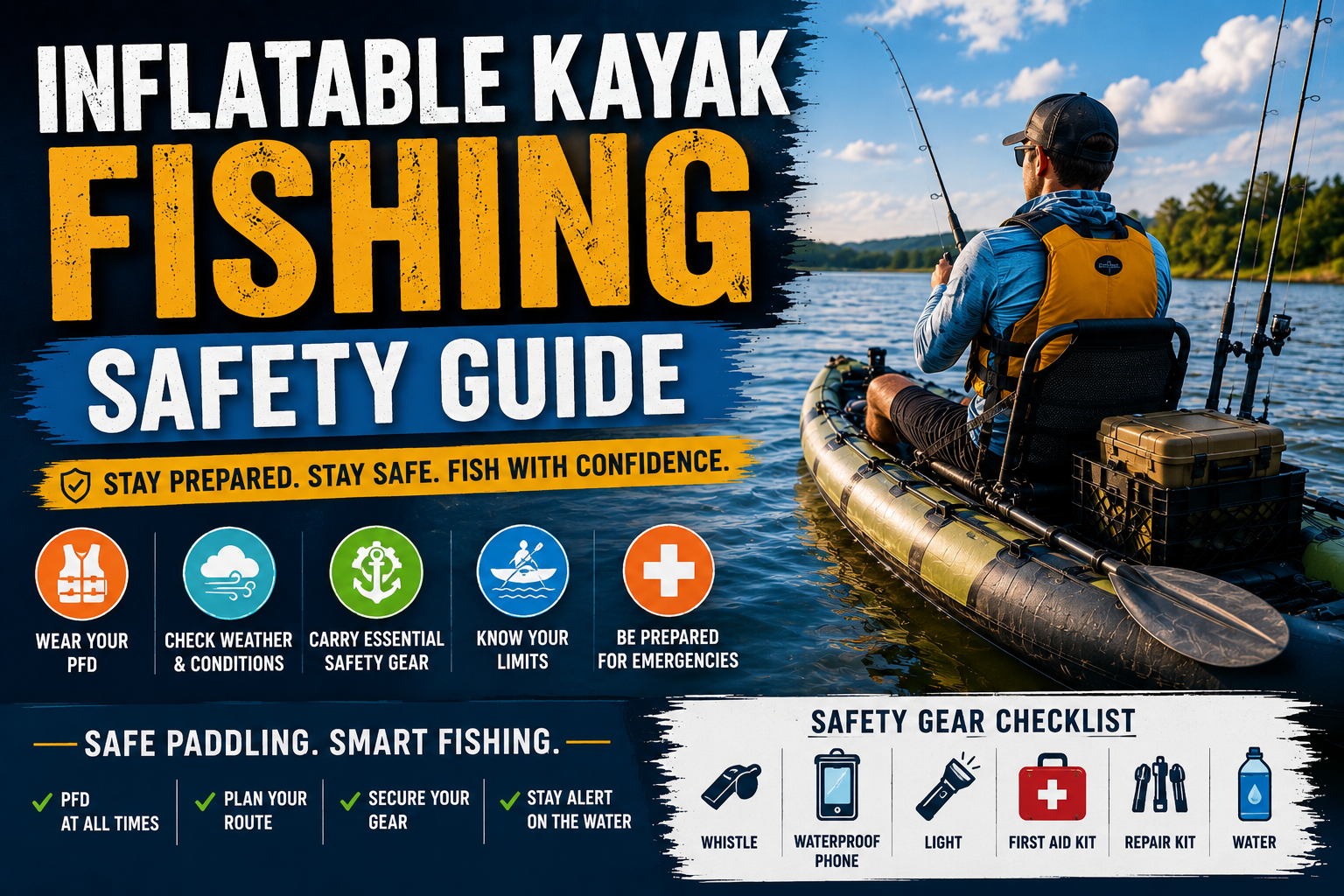
Inflatable Kayak Fishing Safety Guide with PFD tips, weather rules, puncture prevention, self-rescue steps, and a pre-launch checklist.
Fishing from an inflatable kayak can be safe, effective, and a lot of fun—but only if you treat it like a real small-boat activity, not a casual float. The biggest safety mistakes usually happen before the first cast: launching in the wrong conditions, carrying the wrong gear, overloading the kayak, skipping a PFD, or assuming an inflatable is “fragile” and then overcorrecting with too much equipment.
This Inflatable Kayak Fishing Safety Guide breaks down exactly how to stay safe on the water, from choosing the right conditions and wearing the right gear to preventing punctures, handling hooks, anchoring safely, and getting back into your kayak if you flip.
What You’ll Learn
- Whether inflatable kayaks are safe for fishing
- The biggest inflatable-kayak fishing risks
- The essential safety gear to carry every trip
- How to prevent punctures from hooks, tools, and fish handling
- How to choose safe weather, wind, and water conditions
- Cold-water safety rules for kayak anglers
- How to anchor an inflatable kayak safely
- How to practice self-rescue and re-entry
- A pre-launch inflatable kayak fishing safety checklist

Quick Answer: Is It Safe to Fish from an Inflatable Kayak?
Yes—modern inflatable kayaks can be safe for fishing when they are used in the right conditions, inflated properly, rigged carefully, and paired with basic paddling and safety skills. Most quality inflatable kayaks use durable materials, multiple air chambers, and stable hull designs that are more capable than many first-time buyers expect.
The real risk usually is not “the kayak might suddenly pop.” The bigger safety issues are the same ones that hurt paddlers in other small craft:
- not wearing a PFD
- fishing in wind or storms beyond your skill level
- cold-water immersion
- poor self-rescue skills
- overloading the kayak with gear
- using anchors, hooks, and tools carelessly
The Biggest Safety Risks in Inflatable Kayak Fishing
1) Not wearing a PFD
This is still the number-one mistake. A life jacket does not help if it is strapped to the back of the seat. Wear it the entire time, including launch and landing.
Why it matters so much
If you flip:
- you may hit your head
- you may be tangled in gear
- cold water can trigger gasping and panic
- waves or current can separate you from your paddle
- getting back into a loaded fishing kayak can take longer than expected
Safer choice
Use a kayak or fishing-specific PFD with:
- a snug fit
- arm clearance for paddling and casting
- pockets for whistle, knife, and small safety items
- enough comfort that you will actually wear it
2) Wind and weather that overpower the kayak
Most inflatable-kayak fishing problems start with conditions, not equipment. A calm lake at sunrise can turn into a hard paddle home by late morning. Add fishing gear, a drifting boat position, and a bit of fatigue, and the risk goes up fast.

Common weather mistakes
- launching because the ramp looks calm, without checking the full forecast
- crossing open water early, then facing a headwind on the way back
- fishing far from shore with no protected route home
- staying out when thunder is building
- underestimating how much harder a loaded inflatable is to control in gusts
General rule
If the trip requires you to “push your luck” just to get back, it is not a good inflatable-kayak fishing day.
3) Cold water, even on warm days
Cold water is one of the most overlooked dangers in kayak fishing. You can launch on a sunny spring day and still be paddling over water cold enough to trigger cold shock, fast breathing, and loss of function if you fall in.
Why anglers get fooled
- the air feels warm
- the shoreline looks calm
- the trip is “just a short paddle”
- you do not plan to swim
But kayak safety is based on what happens if you capsize, not what you hope happens.
The cold-water rule that matters
Dress for water temperature, not just air temperature. If the water is cold enough that an unexpected swim would be dangerous, your clothing and trip plan need to change.
4) Hook, knife, and tool hazards
Inflatable kayaks do not burst from a single near-miss with a lure, but sharp gear is still a real risk. Most puncture problems come from sloppy handling, not from the fish themselves.
High-risk items
- treble-hook lures
- exposed jigheads on the floor
- open tackle trays sliding around
- knives and braid scissors tossed loose
- lip grippers or pliers clipped where they can swing into the tube
- fish flopping with a lure still pinned in them
Final Thoughts on Inflatable Kayak Fishing Safety
An Inflatable Kayak Fishing Safety Guide should do more than tell you to “be careful.” Safe inflatable-kayak fishing comes down to a few simple habits done every trip: wear your PFD, fish within the conditions, keep the kayak uncluttered, manage sharp gear intelligently, respect cold water, and practice self-rescue before you need it.
The good news is that modern inflatable kayaks can be excellent fishing platforms for lakes, ponds, protected rivers, and calm inshore water. The bad news is that they do not forgive bad decisions any more than any other small craft does.
If you want the safest path forward, start small:
- fish close to shore
- keep the setup simple
- wear the PFD
- practice flipping and re-entry in safe conditions
- build skill before you add wind, current, distance, or heavy gear
That approach will do more for your safety than any single accessory ever will.