
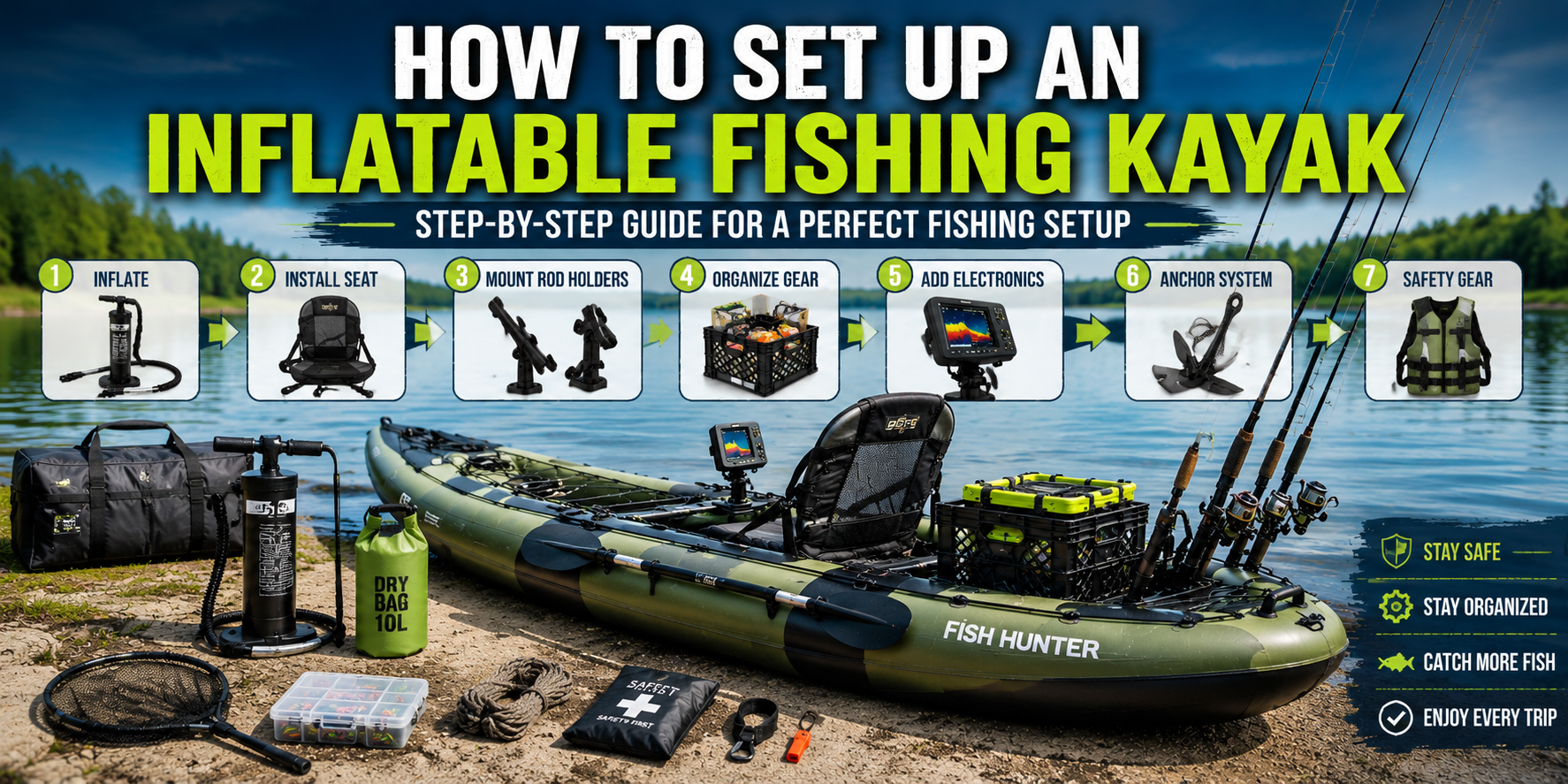
Learn how to set up an inflatable fishing kayak with step-by-step instructions, gear recommendations, safety tips, and expert setup advice.
Setting up an inflatable fishing kayak correctly can make the difference between a frustrating day on the water and a productive fishing trip. A well-organized kayak improves safety, stability, comfort, and fishing efficiency.
Whether you’re new to kayak fishing or upgrading your current setup, this guide will show you exactly how to set up an inflatable fishing kayak from inflation to launch.
What Is an Inflatable Fishing Kayak?
An inflatable fishing kayak is a portable kayak made from durable PVC, drop-stitch, or reinforced materials designed specifically for anglers.
Unlike traditional hard-shell kayaks, inflatable models offer:
- Easy transportation
- Compact storage
- Quick setup
- Excellent stability
- Comfortable seating
Modern inflatable fishing kayaks can support anglers, tackle, electronics, and accessories while maintaining impressive durability.

Step 1: Inflate the Kayak Correctly
Proper inflation creates a stable fishing platform.
How to Inflate
- Unfold the kayak completely.
- Inspect for damage.
- Connect the air pump.
- Inflate side chambers first.
- Inflate the floor chamber.
- Inflate seat cushions.
- Verify manufacturer PSI recommendations.
Common Inflation Mistakes
- Overinflating chambers
- Ignoring pressure limits
- Using damaged valves
- Launching with soft chambers
Use a pressure gauge rather than guessing.
Step 2: Install the Fishing Seat
A comfortable seat supports long fishing sessions.
Seat Positioning Tips
- Center the seat.
- Keep weight balanced.
- Tighten all straps.
- Test comfort before launching.
Benefits of Proper Seat Setup
- Improved casting accuracy
- Better paddling efficiency
- Reduced back strain
Step 3: Organize Storage and Gear Placement
Weight distribution is critical.
Place Heavy Items Near the Center
Store Lightweight Items at the Ends
Step 4: Install Rod Holders
Rod holders free your hands and increase fishing efficiency.
Types of Rod Holders
Flush-Mount Holders
Permanent installation.
Clamp-On Holders
Ideal for beginners.
Track-Mounted Holders
Most adjustable option.
Best Placement
- Behind the seat
- Side rails
- Forward accessory tracks
Avoid placing rod holders where they interfere with paddling.

Step 5: Add a Fish Finder and Electronics
Many inflatable kayaks now support fish finders.
Basic Fish Finder Setup
- Mount display within reach.
- Secure battery in a dry box.
- Attach transducer.
- Route cables safely.
- Test before launch.
Step 6: Install an Anchor System
Anchors help maintain position in wind and current.
Common Anchor Types
| Anchor Type | Best For |
| Grapnel | Lakes |
| Mushroom | Calm water |
| River Anchor | Current |
Step 7: Secure Safety Equipment
Safety should never be optional.
Required Safety Gear
- Coast Guard-approved PFD
- Safety whistle
- First aid kit
- Waterproof phone case
- Emergency light
- Bilge pump
Additional Safety Items
- Knife
- Spare paddle
- Tow rope
- Emergency blanket
Step 8: Attach Fishing Accessories
The right accessories improve efficiency.
Essential Fishing Accessories
- Landing net
- Tackle crate
- Paddle leash
- Rod leash
- Dry bag
- Fish grips
Optional Upgrades
- Camera mount
- GPS unit
- Action camera
- Cup holder
- Gear tracks
Best Inflatable Fishing Kayak Setup for Beginners
Simple Starter Setup
- PFD
- Paddle
- Paddle leash
- One rod holder
- Small tackle box
- Dry bag
- Landing net
This setup remains affordable while covering all essential needs.
Advanced Inflatable Fishing Kayak Setup
Experienced anglers may add:
- Fish finder
- GPS
- Anchor trolley
- Multiple rod holders
- Camera mount
- Battery box
- Fishing crate system
This creates a professional-level kayak fishing platform.
Conclusion
Knowing how to set up an inflatable fishing kayak properly helps you fish more efficiently, stay safer, and enjoy longer days on the water. Start with essential safety gear, organize equipment carefully, balance weight distribution, and gradually add accessories that match your fishing style. A thoughtful setup creates a stable and productive fishing platform that can compete with many traditional fishing kayaks while remaining portable and easy to store.