
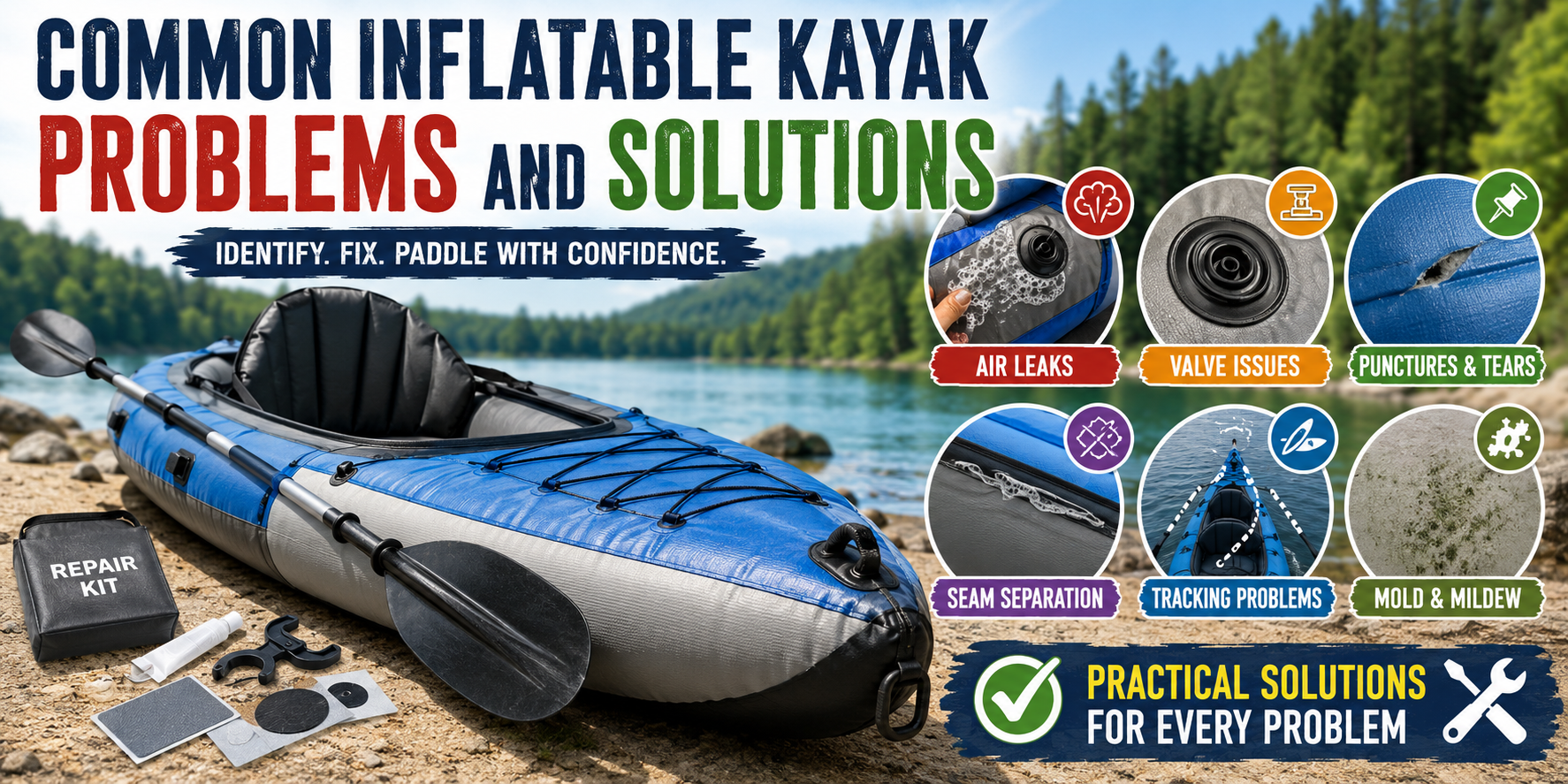
Discover common inflatable kayak problems and solutions, including leaks, valve issues, punctures, repairs, and maintenance tips.
Inflatable kayaks are popular because they are lightweight, portable, and surprisingly durable. Modern designs use advanced materials and drop-stitch technology that allow them to perform remarkably well on rivers, lakes, and coastal waters.
However, like any piece of outdoor equipment, they can develop issues over time. Air leaks, punctures, valve failures, and tracking problems are among the most common complaints from kayak owners.
Understanding these issues and knowing how to fix them can save money, improve safety, and extend the lifespan of your kayak.
What You’ll Learn
In this guide, you’ll discover:
- The most common inflatable kayak problems
- How to diagnose issues accurately
- Step-by-step repair methods
- Preventive maintenance strategies
- Storage best practices
- Expert recommendations
- Answers to frequently asked questions

What Are the Most Common Inflatable Kayak Problems?
Common inflatable kayak problems include air leaks, punctures, valve failures, seam separation, pressure loss, tracking issues, mold growth, and material deterioration caused by UV exposure or improper storage. Most problems can be prevented through regular maintenance and proper handling.
Air Leaks and Slow Deflation
Why Inflatable Kayaks Lose Air
Air leaks are the most frequently reported issue among kayak owners.
Common causes include:
- Small punctures
- Damaged valves
- Worn seams
- Manufacturing defects
- Abrasion damage
Signs of an Air Leak
- Soft kayak after a few hours
- Reduced performance
- Visible bubbles in water
- Hissing sounds
How to Find the Leak
- Inflate the kayak fully.
- Mix water with dish soap.
- Spray suspected areas.
- Watch for bubbles.
- Mark the leak location.
Expert Tip
Tiny leaks often appear around valve bases and seams rather than large visible punctures.
Punctures and Tears in Inflatable Kayaks
Common Causes of Kayak Punctures
Punctures typically occur due to:
- Sharp rocks
- Fishing hooks
- Broken glass
- Tree branches
- Improper transportation
Common Mistakes
Using incorrect patch materials
Applying patches on wet surfaces
Inflating before adhesive cures
Inflatable Kayak Valve Problems
Symptoms of Valve Failure
Valve issues can mimic punctures.
Common signs include:
- Air escaping around valve
- Difficulty inflating
- Valve cap popping open
- Inconsistent pressure
Solutions
Tighten the Valve
Many leaks occur because valves loosen during transport.
Steps:
- Deflate kayak.
- Use valve wrench.
- Tighten gently.
- Reinflate and test.
Replace Damaged Components
Replace:
- Valve gaskets
- O-rings
- Valve caps
- Entire valve assemblies if necessary
Seam Separation and Delamination
Why Seams Fail
Seam failures occur due to:
- Age
- UV exposure
- Overinflation
- Poor storage
- Manufacturing defects
Warning Signs
- Visible seam lifting
- Air bubbles near seams
- Distorted kayak shape
Solutions
Small seam separations may be repaired with specialized adhesives.
Large seam failures should be professionally repaired.
When to Replace the Kayak
Consider replacement when:
- Multiple seams fail
- Structural integrity is compromised
- Repair costs exceed 50% of replacement cost

Tracking and Steering Problems
Why an Inflatable Kayak Won’t Paddle Straight
Tracking problems often result from:
- Improper inflation
- Missing skeg
- Uneven weight distribution
- Strong crosswinds
Fixes
Check Inflation Pressure
Use manufacturer-recommended PSI.
Install a Skeg
A skeg improves directional stability.
Balance Weight Properly
Place gear evenly.
Heavy items should remain near the center.
Performance Checklist
- Correct PSI
- Proper skeg installation
- Balanced load
- Calm water conditions
Overinflation and Pressure Problems
Understanding Pressure Changes
Air expands in heat.
A kayak inflated on a cool morning may become overinflated by afternoon.
Risks
- Seam damage
- Valve stress
- Material stretching
Prevention
- Use pressure gauges
- Avoid prolonged direct sunlight
- Release small amounts of air when temperatures rise
Mold, Mildew, and Odor Issues
Why Mold Develops
Moisture trapped inside storage bags creates ideal conditions for mold growth.
Prevention Steps
- Rinse after use.
- Dry completely.
- Store in a ventilated area.
- Avoid damp garages.
Cleaning Solution
Mix:
- Warm water
- Mild soap
- White vinegar
Avoid harsh chemicals.
UV Damage and Material Degradation
Effects of Sun Exposure
Long-term UV exposure causes:
- Color fading
- Material weakening
- Surface cracking
- Reduced flexibility
Prevention
- Use UV protectant sprays
- Store indoors
- Cover kayak when not in use
Expert Recommendation
Apply marine-grade UV protectant every few months during heavy-use seasons
Storage and Transportation Damage
Common Storage Mistakes
Many kayak failures begin during storage.
Avoid:
- Folding wet kayaks
- Storing under heavy objects
- Exposure to extreme temperatures
Proper Storage Method
- Clean thoroughly.
- Dry completely.
- Partially inflate.
- Store in cool, dry location.
Inflatable Kayak Maintenance Checklist
Monthly Inspection
- Check valves
- Inspect seams
- Examine patches
- Test inflation pressure
Seasonal Maintenance
- Deep clean kayak
- Apply UV protectant
- Inspect accessories
- Replace worn parts
Annual Inspection
- Full leak test
- Structural assessment
- Repair minor damage before major failures develop
Conclusion
Understanding Common Inflatable Kayak Problems and Solutions helps paddlers prevent costly repairs and enjoy safer adventures on the water. Most issues—including punctures, valve leaks, tracking problems, seam failures, and UV damage—can be identified early and repaired before they become serious. With regular inspections, proper storage, and routine maintenance, an inflatable kayak can provide many years of reliable performance.